



TL:DR
Consumers: Stay curious, ask tough questions and be picky about who gets your money.
Businesses: Aligning your actions to your values—authenticity always beats marketing hype.
We’re told that sustainability is just another victim of the “anti-woke” backlash but – good news – most UK consumers are quietly getting on with it anyway. 73% recycling at home, 68% cutting food waste and over half buying local and repairing products.
Ethical spending in the UK jumped nearly 24% in one year to a record £122 billion, which means consumers increasingly vote with their wallets for eco-friendly products.
Businesses, too, are doubling down: 99 of the top 100 US companies now publish sustainability reports (Reuters). Far from collapsing, sustainability is becoming mainstream, strategic and—let’s face it—just good business.
With sustainability selling like hotcakes, everyone from fashion brands to oil companies is eager to sport a green halo, but as public demand for sustainability grows, so does the temptation for companies to greenwash – to appear environmentally friendly without actually walking the talk. The result? Slick ads with lush forests, vague claims of “green” goodness, and expensive “eco” products that might not be much better for the planet at all. It’s time to cut through the noise.

What Is Greenwashing and Why It’s a Problem?
Greenwashing is essentially marketing spin. It’s when companies make false, misleading, or unsubstantiated claims about how environmentally sound their products or operations are. In other words, it’s a PR tactic to appear “green” without making meaningful changes that reduce actual environmental impact. Stick a green leaf on a 4×4 and call it job done! Why does this matter? For one, greenwashing deceives well-intentioned customers. Research has found consumers are often willing to pay more for products marketed as eco-friendly. That premium might be fine if the product truly delivered on its green promises – but greenwashing means people may be paying extra for nothing. Worse, it undermines trust. When a company’s sustainability claims turn out to be half-truths, consumers grow cynical about all green claims. Greenwashing is also harmful on a broader scale. It lets businesses continue with “business as usual” behind the scenes while putting a green gloss on the surface. As Greenpeace explains, this distracts us from real solutions – it tricks us into thinking progress is being made when it isn’t. Every pound spent on a fake “eco” product is a pound not spent supporting a truly sustainable business. In short, greenwashing wastes our time, money, and goodwill and delays the environmental action we urgently need.How to Spot Greenwashing: A Guide for Consumers
So, as a savvy consumer, how do you see through the greenwash gimmicks and avoid being misled? Here are some tell-tale signs of greenwashing to watch out for:- Token gestures: The company hypes a small “green” action to overshadow a larger impact (for example, a fast-food chain might loudly switch to paper straws – while its suppliers are still clearing forests for cattle ranching. In fact, McDonald’s was called out when its new paper straws turned out not even recyclable). A minor improvement is nice, but it doesn’t cancel out major environmental harms.
- Vague or sweeping claims: Beware of buzzwords like “eco-friendly,” “natural,” or “green” with no specifics. If a product simply slaps a leafy logo or says “all-natural” without explanation, that’s a red flag. Genuine eco-leaders provide details – e.g. what makes it sustainable, how much energy/water/carbon was saved, etc.
- No proof or transparency: Can the company back up its claim with data or independent certification? If they want you to take their word for it with no evidence, think twice. Legitimate claims are often verified by third parties (like Energy Star ratings, organic certifications, or science-based targets). No proof? No purchase.
- Irrelevant “green” claims: Sometimes companies boast about something that sounds green but is meaningless in context. A classic example is marketing a product as “CFC-free” when CFCs (ozone-depleting chemicals) are already banned by law. Or labelling a naturally vegan product as “vegan” just to look virtuous. These are distractions – focus on substantive claims instead.
- Carbon offset hype:Many brands now advertise “carbon neutral” products or flights by buying offsets. Offsetting (planting trees or funding renewables elsewhere) isn’t evil, but it can be used to mask ongoing pollution. If a company is only talking about offsets and not about how it’s cutting its own emissions, that’s greenwash. Offsets should be the cherry on top of a real emissions-reduction plan – not an excuse to pollute as usual.
High profile examples
H&M – the world’s second-largest fashion retailer – launched a “Conscious” collection touted as using at least 50% sustainable materials. It sounds great and the effort is a step in the right direction, but H&M faced criticism because these claims were vague and not fully transparent. Meanwhile, the company’s fast-fashion business model kept pushing ever more clothes on shoppers, an approach inherently at odds with sustainability. The lesson? Even a product line with some recycled fabric can be a greenwashing gimmick if the overarching strategy is to sell more and more stuff without addressing the larger impacts. Innocent Drinks – (owned by Coca-Cola) ran feel-good TV ads with cartoon animals singing about fixing the planet. Cute? Yes. But the ads implied that buying Innocent smoothies was helping the environment – a claim far removed from reality given the single-use plastic bottles and Coca-Cola’s status as the world’s worst plastic polluter. The UK Advertising Standards Authority (ASA) stepped in and banned those ads for misleading environmental claims. Again, the devil is in the details: if an eco-claim sounds too rosy and broad (“buy this, save the world!”), be sceptical.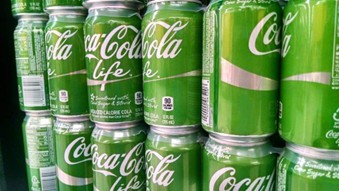
Cola is worst of the world’s worst plastic polluters with hazy eco-goals but has sponsored several COP meetings and is regarded as one of the biggest greenwashers (number 5 in this list).
Bottom line for consumers
Don’t be dazzled by green marketing. Read the label and the fine print. Look for concrete info or third-party seals (like B-Corp, Fairtrade, Rainforest Alliance, etc.) that indicate a brand is serious, not just greenwashing. Your knowledge is your biggest weapon against being duped. And if you suspect a company is greenwashing, you have more power than you think to call it out – which brings us to the next point.What You Can Do as a Consumer
In the face of greenwash, consumer action is crucial. Here are a few ways you can make a difference:- Question and research:Before buying into a green claim, do a quick sanity check. Ask yourself: How exactly is this product better for the environment? If the answer isn’t clear, check the company’s website for a sustainability section or look for reviews from independent sources. A little due diligence can save you from falling for a sham.
- Leverage social media:If you catch a whiff of greenwash, speak up! Post on social media, tag the company, and ask pointed questions. Public pressure works – companies hate bad press. Greenpeace notes that calling out companies publicly (even filing complaints with advertising watchdogs) can expose misleading claims and push brands to change. The more people shine a light on greenwashing, the less companies can get away with it.
- Support the good actors:On the flip side, reward the businesses that are doing the right thing. Buy from companies with genuine sustainable practices, and give them shout-outs on your LinkedIn, Twitter, or Facebook. There are plenty of sincere eco-driven brands out there – from Patagonia’s repair-and-reuse ethos to local zero-waste shops. By voting with your wallet and your voice, you encourage better business. (After all, if greenwash doesn’t sell but true sustainability does, companies will get the message loud and clear.)
- Ask tough questions:Don’t be shy about contacting brands directly. Send an email or ask in-store: “What makes this product sustainable? Has its carbon footprint been measured? Does your company have science-based targets?” You might be surprised – a good company will have answers. A flimsy one will flounder. Your questions also signal to businesses that consumers are educated and watching.
- Educate yourself continually:The eco-space is always evolving, and so are the tricks. The more you know about climate change, plastics, or whatever environmental issue a claim touches, the harder it is for a company to pull the wool over your eyes. You’ll start to spot greenwash in an instant – and you can help friends and family spot it too.
When Good Intentions Go Bad: A Note to Businesses
Greenwashing isn’t just a concern for consumers; it’s a cautionary tale for companies too. If you’re a business leader or marketer trying to do right by the planet, you might wonder: “We mean well – could we still be accused of greenwashing?” The answer is yes – even good intentions can backfire if handled poorly. Many a company has launched a well-meaning green initiative, only to be blasted for hypocrisy because it wasn’t backed by real change throughout the organisation. Here’s how good intentions go wrong and how to avoid stumbling into the greenwash trap:- Make sustainability a core value, not a campaign.If your eco-friendly effort is just a one-off marketing campaign while the rest of your business chugs along unsustainably, people will notice. For example, if an oil company sponsors a tree-planting day but hasn’t addressed its own drilling impacts, that’s performative. Or consider the earlier H&M case – introducing a “Conscious” line without making broader changes invites scepticism.
- To be credible, embed sustainability into your business model and culture. Set company-wide targets (like reducing carbon emissions, switching to renewable energy, cutting waste) and be transparent about progress. Then, when you do market a green product, it’s seen as part of a bigger commitment, not just PR.
- Back up your claims with data.Vague promises won’t cut it. If you say, “Our new packaging is eco-friendly,” be ready to share how much plastic it saves or its recyclability rate, etc. Businesses that provide evidence (think life-cycle analysis results, carbon footprint numbers, certification logos) not only avoid greenwashing, they build trust. In contrast, leaving out the details can land you in hot water. (Just ask Ryanair – the airline boldly advertised itself as “Europe’s lowest emissions airline” without sufficient proof, and the ASA slammed the ad as false and banned it.)
- The lesson: be specific, be truthful, and if you don’t have the data yet, maybe hold off on the claim.
- Beware of the “one green product” syndrome.This is when a company puts out a single sustainable product (or pilot program) and markets it heavily but doesn’t expand on it. Consumers rightfully ask: What about the rest of your products? If a coffee chain introduces a compostable cup but all other packaging is wasteful, it can look like tokenism. It’s fine to start small – nobody expects an overnight transformation
- communicate your roadmap. For instance, if you pilot one electric delivery vehicle, pair the announcement with your plan to electrify the whole fleet over time. Otherwise, that lone EV can come across as a prop.
- Educate your team (and perhaps your customers).Sometimes greenwashing isn’t malicious; it’s born of ignorance. A marketing team might genuinely think a claim is valid without realizing a nuance. Prevent this by training your staff on sustainability issues – Carbon Literacy anyone?! Bring in experts to audit your claims. Encourage a culture where people ask, “Are we sure this is true? Could this be misleading?” before it goes out the door. It’s better to catch a dubious claim internally than to have the public or regulators do it for you.
- Regulations are getting stricter: the EU, for example, found that over half of green claims examined in 2020 were vague or misleading, and new laws will penalise companies that can’t justify their environmental claims within 10 days. The writing is on the wall – transparency and accuracy are no longer optional.
- Embrace third-party scrutiny and certification.One way to ensure you’re not inadvertently greenwashing is to let credible third parties assess you. Pursue certifications like B Corp status (which checks your social and environmental performance rigorously) or get your emissions targets validated by the Science Based Targets initiative.
The Road Ahead: From Greenwash to Genuine Change
Despite all the greenwashing out there, there’s plenty of reason to be hopeful. More consumers are wise to gimmicks now than ever before, and they’re pushing back – demanding better from businesses and many companies are rising to the challenge in inspiring ways.
Collective action.
When we call out greenwashing and champion genuine sustainability, we send a clear message of what the market expects. The more we celebrate companies that are truly “green” and challenge those that aren’t, the more we tip the balance in favour of honesty. Already we’ve seen major banks have their misleading climate ads banned, airlines taken to task for dubious “low emissions” claims, and food giants pressured into more sustainable sourcing – all because activists, customers, and regulators decided enough was enough. Change is in the air.
So let’s keep the conversation going. Call out the greenwashing when you see it but also call in those companies that are trying to improve – encourage them, give feedback, show there’s a market for truly green products and services. With eyes wide open and a cooperative spirit, we can turn the tide from cynical greenwashing to genuine progress. That’s not just wishful thinking; it’s already happening and it’s the future we want.
More information
Written By Dr Sandra Lee